
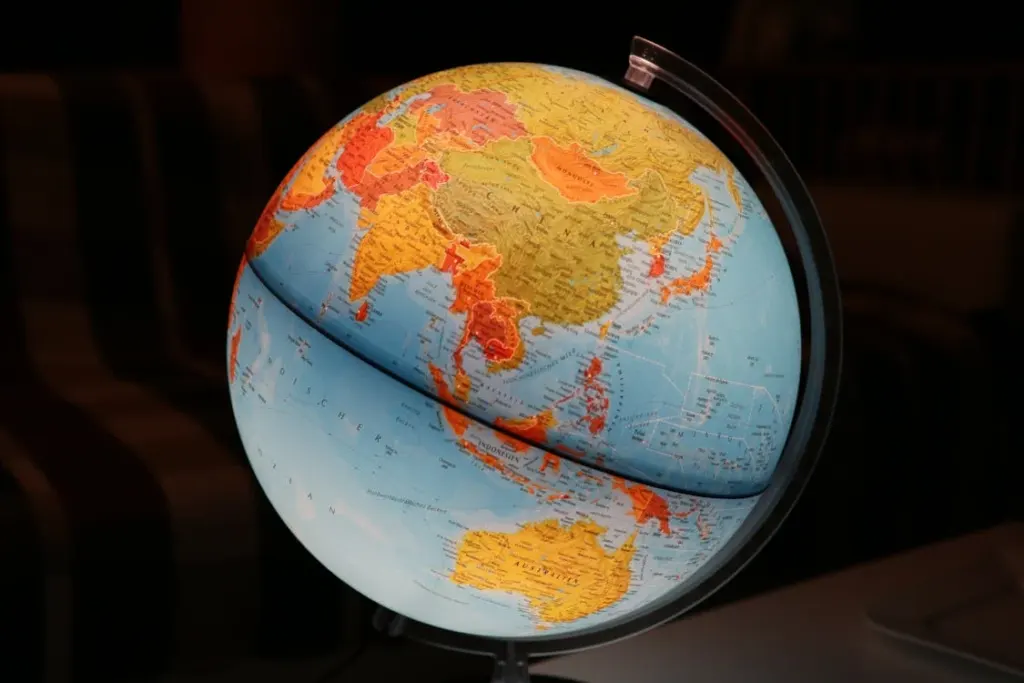
Geography
Geography is a dynamic and relevant subject that helps students understand the world around them. It develops critical thinking, analytical skills, and the ability to understand complex global issues – all essential skills for the 21st century.
Entry Requirements
To join this course, students need: Grade 5 in Geography, Mathematics and English. Students must have studied Geography at GCSE.
Course Details
Edexcel A level Geography (9GEO)
Specification – https://qualifications.pearson.com/en/qualifications/edexcel-a-levels/geography-2016.html
Course Description
The A Level Geography course is divided into a number of topics split between units studied over two years. It provides students with an in-depth understanding of both physical and human geography, alongside essential geographical skills that are highly valued by universities and employers.
Programme of Study
The curriculum is carefully structured to build your knowledge progressively across two years:Physical Geography:
- Tectonic processes and hazards
- Coastal systems
- Water systems and water insecurity
- The carbon cycle and energy security
Human Geography:
- Globalisation
- Global development
- Health and human rights
- Regeneration
- Superpowers
The course also develops geographical skills, including statistical analysis tests, extended writing and fieldwork. These skills are integrated throughout the course and are essential for success in both examinations and future academic or professional pursuits.
Assessment
The course is assessed through three written examinations and one independent investigation as a non-examination assessment. Students must complete all assessments in May/June in any single year.
Written Examinations
Paper 1 (9GEO/01)
- Duration: 2 hours 15 minutes
- Marks: 105 marks (30% of the qualification)
- Sections:
- Section A: Topic 1 – Tectonic Processes and Hazards (compulsory)
- Section B: Topic 2 – Landscape Systems, Processes, and Change (choose one sub-topic: Glaciated Landscapes and Change or Coastal Landscapes and Change)
- Section C: Topics 5 and 6 – The Water Cycle and Water Insecurity, and The Carbon Cycle and Energy Security (compulsory)
- Question Types: Short open, open response, calculations, resource-linked questions, 12-mark and 20-mark extended writing questions
- Calculators: Allowed
Paper 2 (9GEO/02)
- Duration: 2 hours 15 minutes
- Marks: 105 marks (30% of the qualification)
- Sections:
- Section A: Topic 3 – Globalisation (compulsory)
- Section B: Topic 7 – Superpowers (compulsory)
- Section C: Topic 4 – Shaping Places (choose one sub-topic: Regenerating Places or Diverse Places)
- Section D: Topic 8 – Global Development and Connections (choose one sub-topic: Health, Human Rights and Intervention or Migration, Identity and Sovereignty)
- Question Types: Short open, open response, calculations, resource-linked questions, 12-mark and 20-mark extended writing questions
- Calculators: Allowed
Paper 3 (9GEO/03)
- Duration: 2 hours 15 minutes
- Marks: 70 marks (20% of the qualification)
- Content: Synoptic assessment of geographical skills, knowledge, and understanding from compulsory content across the course
- Question Types: Open response, calculations, resource-linked questions, 8-mark, 18-mark, and 24-mark extended writing questions
- Calculators: Allowed
Independent Investigation (9GEO/04)
- Marks: 70 marks (20% of the qualification)
- Word Count: 3000–4000 words
- Content: Students undertake an independent investigation based on a question or issue related to the specification. It includes fieldwork data, research, and secondary data
- Submission: at the end of Year 13.
Where can Geography take you
Geography is a facilitating subject, meaning it’s welcomed by top universities across a wide range of degree programmes. The broad skill set you’ll develop makes Geography graduates highly valued across numerous sectors, from environmental consultancy to international development, from urban planning to business analytics.
Whether you’re interested in tackling climate change, understanding global inequalities, managing natural resources, or shaping sustainable cities, A Level Geography provides the foundation you need.
It is essential for those wishing to follow courses in environmental sciences, and is highly relevant for environmental management, hazards management, surveying, architecture, transport, retail, civil service, tourism and journalism, as well as many more subject-specific jobs, such as oceanography, volcanology and demographic studies and development-related work.
Useful Links
- Pearson Edexcel: Access qualifications information and past exams through the Pearson Edexcel website.
- Royal Geographical Society (RGS): Provides student guides for the independent investigation, “Ask the Geographer” podcasts, and various educational resources.
For more information, contact Mr P. Dawson, Acting Head of Humanities – Geography Lead, Townsend Church of England School.